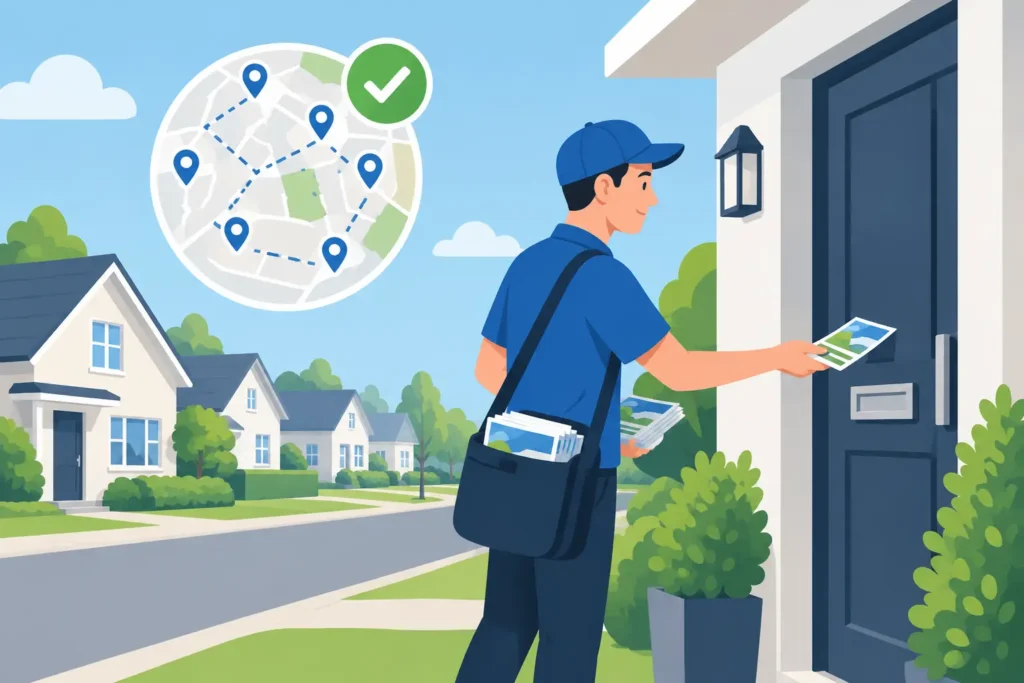
A café opening near Wood Green, a gym filling new classes in Enfield, or a trades business targeting postcodes in East London all face the same decision: printed vouchers versus QR codes. One puts an offer directly in a customer’s hand. The other asks them to take an immediate digital action. Neither is automatically better. The strongest choice depends on the offer, the audience, the location and, above all, how easy you make redemption.
For local businesses, this is not a debate about print against digital. It is about building a promotion that gets noticed, remembered and acted on. A well-distributed leaflet can create reach where online advertising may be ignored. A QR code can show exactly which campaign prompted a visit, booking or enquiry. Used together, they can turn a local print campaign into a measurable customer acquisition tool.
Printed Vouchers Versus QR Codes: The Real Difference
Printed vouchers are familiar. They make an offer feel physical and immediate: bring this in, show it at the counter, receive the stated benefit. That clarity is valuable for restaurants, salons, shops, classes and local services where the customer can redeem in person.
A QR code is a shortcut, not an offer on its own. It takes a prospect from a leaflet to a specific digital destination, such as a booking page, menu, event registration form, enquiry form or short campaign landing page. Its main advantage is reduced friction. Rather than asking someone to search for your business later, you give them a direct route while their interest is still fresh.
The difference is also behavioural. A paper voucher can stay on a kitchen table, in a wallet or on a noticeboard. It works over days or weeks and may be passed to someone else. A QR code depends more heavily on the moment. The person needs a smartphone, a reason to scan and confidence that the page they reach is worth their time.
That makes the question less about which format is modern and more about what action you need next. If your objective is footfall, a printed redemption code may be enough. If you need appointments, registrations or lead details before a customer visits, QR codes have a clear role.
When Printed Vouchers Win
Printed vouchers work particularly well when the value proposition is simple and the redemption point is local. Think of a lunchtime offer from a nearby restaurant, an introductory treatment at a beauty salon, a family activity during school holidays or a retail promotion that needs people through the door.
The recipient does not need to be online at the time. They can decide later, bring the leaflet with them and hand it to a member of staff. This is useful when your audience includes a broad range of ages or when the offer is likely to be considered rather than acted on instantly.
They are also powerful because they create a physical reminder. Digital messages disappear beneath emails, notifications and social feeds. A well-designed voucher is harder to overlook when it has a clear headline, an expiry date, a location and a direct call to action. The leaflet itself keeps working after distribution day.
However, a printed voucher needs operational discipline. Staff must know what the offer is and how to process it. The conditions must be easy to understand. If the wording is vague, or customers are challenged at the point of redemption, an otherwise good campaign can lose trust quickly.
A unique printed promo code can make this much easier. Rather than relying only on returned paper, use a simple code such as LOCAL10 or SPRING24. Staff can record it at the till, over the phone or on a booking form. You retain the convenience of print while gaining a clearer picture of response.
Keep redemption simple
A voucher should answer four questions at a glance: what is the offer, where can it be used, when does it end and what does the customer need to do? Avoid crowded terms and tiny text. If a potential customer has to study the leaflet to understand the deal, the campaign has already created unnecessary resistance.
For door-to-door distribution, add the full address, opening times where relevant and a recognisable landmark or area name. People often keep a leaflet because it reminds them that a useful local business is nearby.
When QR Codes Perform Better
QR codes are strongest when the next step happens online. They are ideal for appointment-led businesses, classes, events, quote requests, restaurant bookings and campaigns where you want prospects to see more information before making a decision.
For example, a physiotherapy clinic can use a QR code to send residents to a short consultation request form. An events venue can take people straight to tickets. A home improvement business can lead to a gallery of completed local work and an enquiry page. In each case, the code does more than identify interest. It moves the prospect towards a defined conversion.
They also support faster campaign learning. A dedicated QR code can point to a unique page created for one leaflet drop, one hand-to-hand team or one targeted area. You can see scans, form submissions and completed bookings, then assess whether the message and location are producing the right type of response.
But scanning is not guaranteed. A code placed in the corner of a crowded flyer without any explanation gives people little reason to use it. The instruction matters. Tell the recipient what they will get: “Scan to book your free assessment”, “Scan to view this week’s menu” or “Scan to claim your event place”.
The page behind the code matters just as much. It must load quickly on a mobile, match the offer on the leaflet and make the next action obvious. Sending someone to a generic homepage is usually a missed opportunity. They should arrive at the exact information they expected to find.
Test it in the real world
Before printing, scan the code on several phones. Check that it works in ordinary indoor light and at arm’s length. Leave enough clear space around it, keep the design high contrast and do not make it so small that it becomes difficult to scan.
Most importantly, make sure there is a fallback. Include a phone number, web address or promotional code for people who prefer not to scan. A QR code should improve access, not become a barrier.
The Best Option Is Often Both
For many London campaigns, the most effective answer is not printed vouchers or QR codes. It is a leaflet that uses both with a clear purpose for each.
The printed voucher gives the offer a physical presence. The QR code provides a fast route to a booking, menu, form or fuller set of details. The customer can choose how to respond. Someone walking past a hand-to-hand team may scan immediately. Someone receiving the same promotion through their letterbox may keep the voucher and visit later.
This combined approach also protects your campaign from incomplete tracking. Not every customer will scan, and not every customer will present a paper voucher. If both routes use the same campaign code or are recorded at the point of contact, you can see the wider impact rather than judging success from one action alone.
The leaflet design needs a hierarchy. Do not give equal visual weight to every message. Lead with the customer benefit, support it with the key details, then make the desired action impossible to miss. If you want scans, position the QR code beside a short, specific instruction. If you want in-store redemption, make the voucher area prominent and easy to tear out or show on arrival.
Match the Format to the Distribution Method
Door-to-door distribution gives printed vouchers time to work. Residents can keep them, discuss them with family members and act when convenient. It is well suited to area-based offers, local openings and services that rely on trust and proximity.
Hand-to-hand distribution can be particularly effective for QR-led campaigns when people are already near the place of redemption. A venue promoting an event around a busy station, for instance, may benefit from a scan-to-book message that captures attention there and then. The same flyer should still include a clear alternative for people who want to decide later.
Targeting is central to both. A strong offer delivered to the wrong households will not produce the right response, regardless of the code or voucher format. Start with the people most likely to need your service, then match the message to the local area and the distribution method.
Reliable execution matters too. GPS-tracked distribution and campaign reporting give businesses confidence that leaflets have reached the intended streets and postcodes. That proof is especially valuable when you are comparing different offers, formats or areas, because you can assess results against confirmed coverage rather than assumptions. Wendigo Distribution combines this control with supervised teams and a money-back guarantee, helping local businesses run campaigns with a clear route from print to response.
Make Measurement Part of the Offer
Do not wait until the campaign ends to think about measurement. Decide before print what counts as a successful action: a redeemed voucher, a scan, a phone call, a completed form, a booking or a visit using a campaign code.
Use one clear identifier for each campaign. If you are testing two areas, give each area its own code or QR destination. If you are testing two headlines, keep the rest of the leaflet consistent. Small changes are easier to judge when the tracking is straightforward.
Numbers alone need context. A QR code with many scans but few completed forms may indicate that the leaflet is compelling but the landing page needs work. A voucher with fewer redemptions but a high rate of repeat visits may be attracting stronger customers. Look at what happens after the first response, not only the first response itself.
The best local promotions remove hesitation. Give people a useful reason to act, put that message in the right hands and offer a route that suits how they prefer to respond. Whether they scan, call, book or walk in, your leaflet should make the next move feel easy.