A new sign above the door is not enough to fill the premises. Grand opening promotions need a clear reason to visit, a tightly targeted local audience and reliable delivery before launch day. When people nearby see the offer repeatedly and can act on it easily, your opening has a far better chance of creating real footfall rather than a quiet first week.
For a shop, restaurant, salon, gym, service business or new local venue, the aim is simple: get the right people through the door, give them a strong first experience and turn initial attention into repeat custom. That takes more than posting once on social media and hoping the local area notices.
Start grand opening promotions with one clear action
The strongest opening campaigns make the next step obvious. Your leaflet, flyer or hand-to-hand promotion should ask people to do one thing: visit on opening day, book an appointment, claim a launch offer, attend an event or scan a code for a specific incentive.
Trying to promote every service, every product and every reason to choose you usually weakens the message. A reader gives a flyer only a few seconds. Lead with the offer or event, state where and when it happens, then provide just enough information to make the visit feel worthwhile.
For example, a new café may focus on a launch-week treat with a drink purchase. A gym may promote a free introduction session. A local trades business could use its opening campaign to offer a neighbourhood consultation slot. The right incentive depends on the business, but it must be easy to understand and simple to redeem.
A deadline adds urgency. “Opening Saturday” is useful, but “Bring this flyer during opening weekend” gives people a firmer reason not to put it aside. Do not make the redemption process complicated. If staff need to explain several conditions at the counter, the promotion is doing too much.
Target the people most likely to respond
Distribution volume matters, but relevance matters just as much. A new family-focused restaurant needs a different local audience from a late-night venue. A dental practice, estate agent or home improvement business will need a different postcode plan again.
Begin with the practical questions. How far will customers reasonably travel? Which streets contain the households, businesses or commuters most likely to use your service? Are there nearby stations, high streets, schools, offices or residential areas that change when and where people are available?
Door-to-door leaflet distribution works well when you need to put a physical invitation directly into nearby homes. It gives residents something they can retain until the weekend or pass to another household member. Hand-to-hand distribution can add momentum around transport hubs, busy shopping areas and local events, particularly when your opening date is close.
The best approach is often a combination. Use door-to-door distribution to build awareness across the core catchment area, then use hand-to-hand teams to create a sharper push in the final days. This is particularly effective in London, where a short distance on a map can mean very different customer behaviour.
Put the opening date where nobody can miss it
A launch flyer is not a brochure. It should be designed to get noticed, understood and acted on quickly. The opening date, location and headline offer need to sit prominently on the front. Do not bury them beneath a long list of features.
Use a strong headline that explains the benefit in plain language. Pair it with clear, professional imagery if it genuinely supports the offer. A restaurant may use an appetising signature dish; a beauty business may show a result; a community event may lead with the activity people can attend. Generic stock images and vague claims rarely create urgency.
Your address should be complete, but directions also help. Mention a recognisable local landmark, nearest station or simple instruction where useful. Include a phone number, website address or QR code only if the customer can use it without friction. A QR code that leads to a slow or unclear page wastes a valuable response opportunity.
Print quality matters too. A poorly printed flyer can make a new business look unprepared before someone has even visited. Consistent branding, readable type and a clear hierarchy give the campaign the authority it needs.
Make the offer measurable
Every grand opening campaign should have a way to measure response. Use a unique promo code, a dedicated QR code, a flyer-only offer or a simple instruction for staff to record how visitors heard about you. This turns local promotion from guesswork into useful evidence.
Keep the code memorable. It could reference the opening month, neighbourhood or launch event. Avoid random strings that customers will not remember and staff may enter incorrectly. If multiple areas receive different leaflet versions, use a separate code for each area. You will then see which locations create the strongest response.
Measure more than redemptions where possible. Track calls, bookings, web visits, enquiries and walk-ins during the campaign period. A leaflet may prompt someone to search for you, follow your social account and visit several days later. That response still counts, even if they do not arrive holding the flyer.
Time distribution around the opening, not after it
A flyer arriving after your launch weekend cannot create anticipation for it. Plan the distribution schedule backwards from the date you want people to attend.
For most local openings, a first drop around two to three weeks before launch gives households time to notice the business and make plans. A second, more urgent push in the final week can remind people that the date is close. If you are running a ticketed event, appointment-led launch or limited-capacity activity, allow more time for people to respond.
There is a trade-off. Distribute too early and some people forget. Leave it too late and households may not see the message before the event. The right timing depends on the offer, the type of customer and how quickly people normally decide to visit. A restaurant opening may benefit from a concentrated final-week push, while a clinic or home service may need a longer consideration period.
Coordinate the campaign with your operational readiness. Staff must know the offer, the premises must be ready and opening hours must be accurate everywhere. Nothing damages a first impression faster than a customer arriving with a valid flyer and finding closed doors, unclear terms or a team that has not been briefed.
Demand proof that the distribution happened
A well-designed flyer only works if it reaches the planned streets. That is why distribution control should be part of the campaign, not an afterthought.
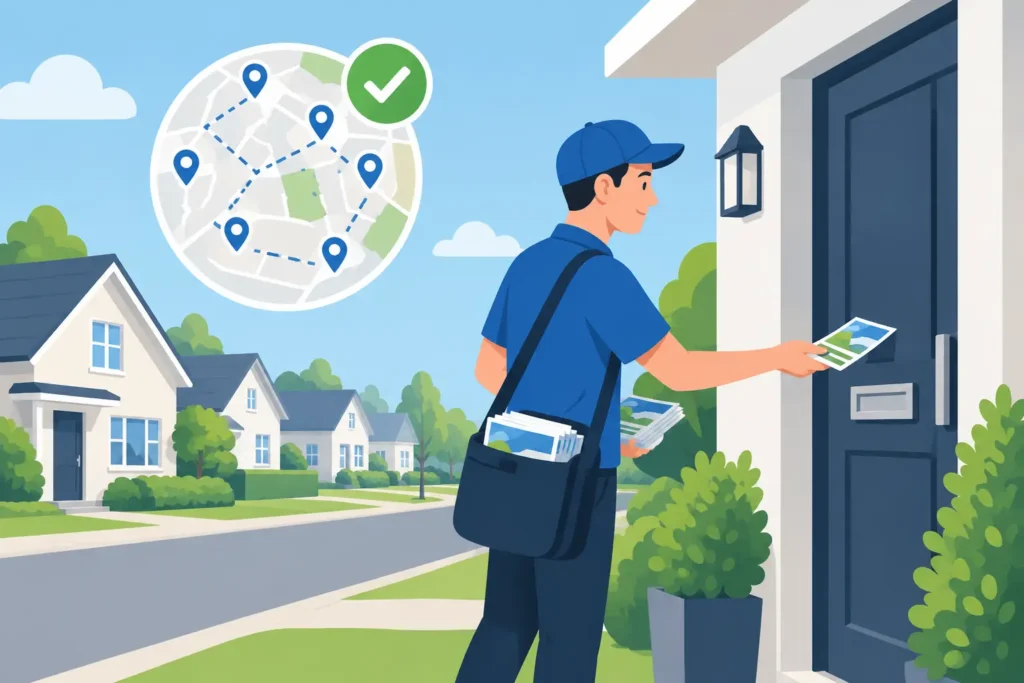
Ask how the routes are selected, how delivery teams are supervised and what reporting you receive once the work is complete. GPS-tracked distribution provides practical evidence that teams covered the agreed areas. It also gives you confidence that the campaign is being managed properly rather than simply handed over without oversight.
At Wendigo Distribution, campaigns are planned from targeting and creative support through printing and GPS-tracked delivery. Trained teams, active supervision and a clear money-back guarantee give local businesses greater control over their launch activity. For an opening campaign, that accountability matters because the timing cannot be recovered once the date has passed.
Turn the first visit into local repeat custom
The launch is the beginning, not the finish line. Once people arrive, give them a reason to come back and a way to stay connected. This could mean a return-visit voucher, an upcoming event, a loyalty sign-up or a simple invitation to follow your local updates.
Do not rely on one busy day as proof that the campaign has succeeded. Look at which offer was redeemed, which area generated the most activity and what customers said when they arrived. Those details will improve your next leaflet drop and help you build a repeatable local acquisition plan.
A successful opening feels busy because the campaign was planned with purpose. Put a clear offer in front of the right local people, distribute it with verified coverage and make every response easy to track. Then use the attention you have earned to give your new customers a reason to return.