A strong café promotion example does not try to appeal to everyone walking through London. It gives a specific local audience one clear reason to visit soon, then makes the response easy to measure. For an independent café, that might mean filling quieter weekday mornings, winning nearby office lunch trade, or turning first-time visitors into regulars.
The most effective campaigns pair a sharp printed offer with disciplined local distribution. A good leaflet cannot compensate for weak targeting, and a well-targeted drop cannot rescue a vague message. When the offer, the postcode selection and the delivery execution work together, printed promotion can put your café in front of the people most likely to become customers.
A café promotion example built for weekday footfall
Imagine a neighbourhood café near a cluster of offices, flats, gyms and a busy high street. The owner wants more trade between 8am and 11am, when capacity is available but passing traffic is unreliable. Rather than advertising the entire menu, the campaign focuses on one easy-to-understand offer: Show this leaflet before 11am and receive a free pastry with any hot drink.
That offer works because it has a job. It encourages a first visit during a defined period, protects the café from an open-ended giveaway and introduces customers to items they may buy again. The leaflet is not simply announcing that the café exists. It is creating a reason to change someone’s routine this week.
The front should lead with an appetising image, the café name, the offer and a deadline. Keep the main message readable at arm’s length. On the reverse, include the address, opening times, a simple location cue such as “two minutes from the station”, and a short line that explains what makes the venue worth returning to. Freshly baked food, independent coffee, vegetarian lunch options or a calm place to work are all more useful than broad claims about quality.
A unique promo code, such as MORNING10, turns each redemption into evidence. Staff should be briefed to enter the code at the till or tally it consistently. This avoids the common mistake of declaring a campaign successful because the café felt busy, without knowing whether the leaflet drove the increase.
Start with the business outcome, not the design
A flyer campaign needs one primary objective. Trying to increase breakfast visits, lunch orders, delivery sales, loyalty sign-ups and private hire enquiries on one small leaflet usually produces a cluttered message and a weak response. Choose the outcome that matters most over the next few weeks.
For example, a café close to a school-run route may promote grab-and-go breakfast. A venue near a business park could focus on pre-ordered lunch collection. A café in a residential area may get better results from a weekend brunch offer delivered door-to-door. The same creative will not perform equally well in every catchment.
This is where local knowledge matters. In areas such as Enfield, Harrow, Tottenham or Walthamstow, customer routines can change dramatically within a short distance. One set of streets may contain commuters who need speed; another may be home to families who value a relaxed weekend destination. Target the audience behind the objective, not a broad map simply because it looks convenient.
Make the offer valuable without making it complicated
The best café offers are quick to understand and easy for staff to honour. A customer should know in seconds what they receive, what they need to buy, when they can use it and where they need to present it. If a member of staff has to explain several conditions at the counter, the promotion has already created friction.
A free add-on with a qualifying purchase can work well when the goal is trial. A time-limited bundle can move traffic into a quieter daypart. A bounce-back offer, given after the first redemption, can help build a second visit. For example, a leaflet may bring in a new customer for coffee and a pastry, while their receipt invites them back for lunch later that week.
There are trade-offs. A deep discount can attract attention, but it may encourage one-off bargain seekers rather than the repeat customers a café needs. A modest, relevant benefit often performs better when it introduces the customer to the experience you want them to remember. If your homemade cakes are a differentiator, let the offer put one in their hands. If speed is the advantage, promote the pre-order collection route instead.
Target the streets where the offer makes sense
Door-to-door distribution gives cafés the chance to reach residents before they decide where to spend their weekend or work-from-home morning. Hand-to-hand distribution is stronger when the offer depends on immediate action, such as capturing commuters outside a station or visitors near a local event. Many campaigns benefit from using each method for a different purpose.
For a breakfast promotion, distribute to selected residential streets within a realistic walking distance of the café, then reinforce the message near commuter routes on key weekday mornings. For lunch, concentrate hand-to-hand activity around office clusters, business parks and busy pedestrian routes shortly before the lunch decision is made.
Do not assume a larger area will automatically improve results. A café is usually a convenience-led choice. Someone who lives or works too far away may like the leaflet but never visit. Begin with the postcodes and routes where your venue can become part of a regular habit, then expand only when the response supports it.
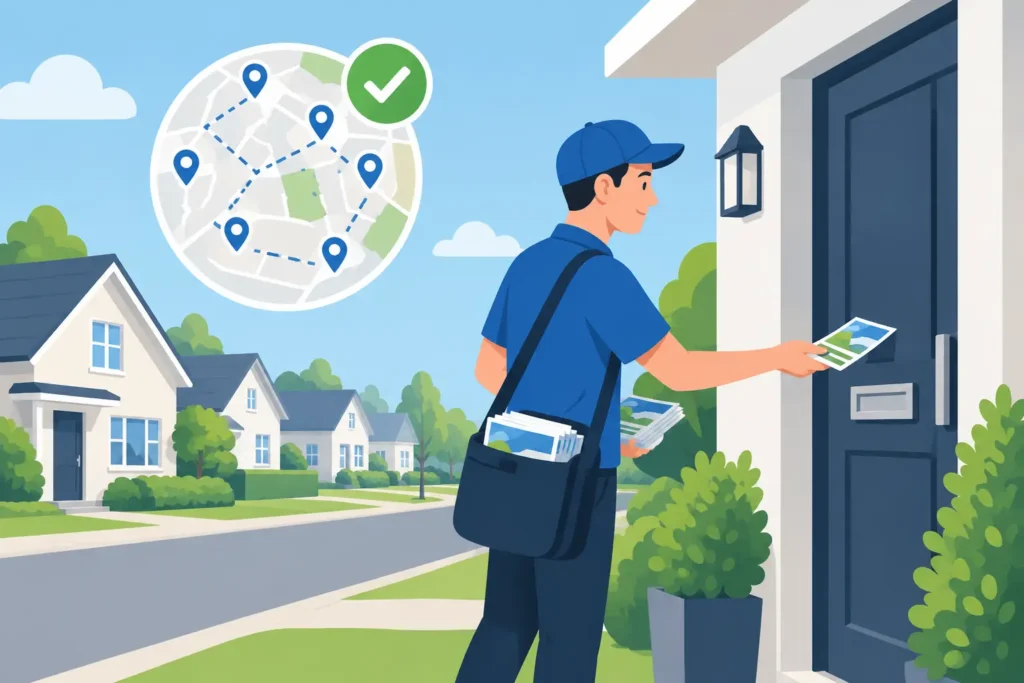
Reliable execution is just as important as the plan. GPS-tracked distribution, active team supervision and clear reporting give a business owner confidence that leaflets have reached the agreed streets. That accountability matters when you are testing an offer and comparing results by area. Wendigo Distribution manages the planning, print support and monitored distribution so cafés can focus on service when the response arrives.
Build the leaflet around one fast decision
People do not read leaflets with the attention they give a menu. They scan them while sorting post, carrying shopping or walking between appointments. Your layout must answer the immediate questions without effort: what is this, what do I get, where is it, and when should I use it?
Use a strong headline such as “Your weekday coffee just got better” only if the offer directly follows it. Avoid filling the page with every social channel, menu category and brand story. Those details can support the campaign, but the leaflet’s first task is to earn a visit.
Include a small map or a recognisable local landmark if finding the café is not obvious. This is particularly useful where a venue sits just off the high street or above street level. A QR code can support the printed message by taking customers to directions, a menu or a pre-order page, but it should never be the only way to understand the promotion. The physical leaflet must stand on its own.
Track more than redemptions
Promo-code redemptions are the clearest starting point, but they do not tell the full story. Monitor when redemptions happen, what customers purchase alongside the offer and whether they return after the first visit. Ask staff for simple observations too: did customers mention the leaflet, did a particular area produce regulars, and were there questions that suggest the wording was unclear?
Compare results by distribution area and method where possible. If homes near the café respond well but a wider residential zone does not, tighten the next drop. If hand-to-hand leaflets generate a burst of same-day visits but little repeat trade, change the second-visit incentive rather than abandoning the channel.
A realistic test period helps. Distribution may create an immediate uplift, while the real value appears when customers who tried the offer come back without one. Keep the code active long enough to capture behaviour, but set a clear closing date so the message retains urgency.
Turn first visits into a local habit
The promotion gets someone through the door. The experience determines whether they return. Make sure the advertised item is available, the team knows the offer, the counter is ready for peak periods and the customer leaves with a reason to come back. A warm welcome and fast service are not extras when the campaign promise is convenience.
For the next step, use the receipt, loyalty card or a simple counter message to introduce a second action. Invite breakfast customers to try lunch. Encourage weekday visitors to return for weekend brunch. Ask regulars to bring a friend. The follow-up should feel like a natural continuation of the first offer, not another hard sell.
A well-planned café promotion is not about scattering flyers and hoping for the best. Give local people a relevant reason to act, place it in the right hands, and measure what happens next. When every leaflet has a clear purpose and every distribution route is accountable, local visibility becomes something you can improve campaign by campaign.