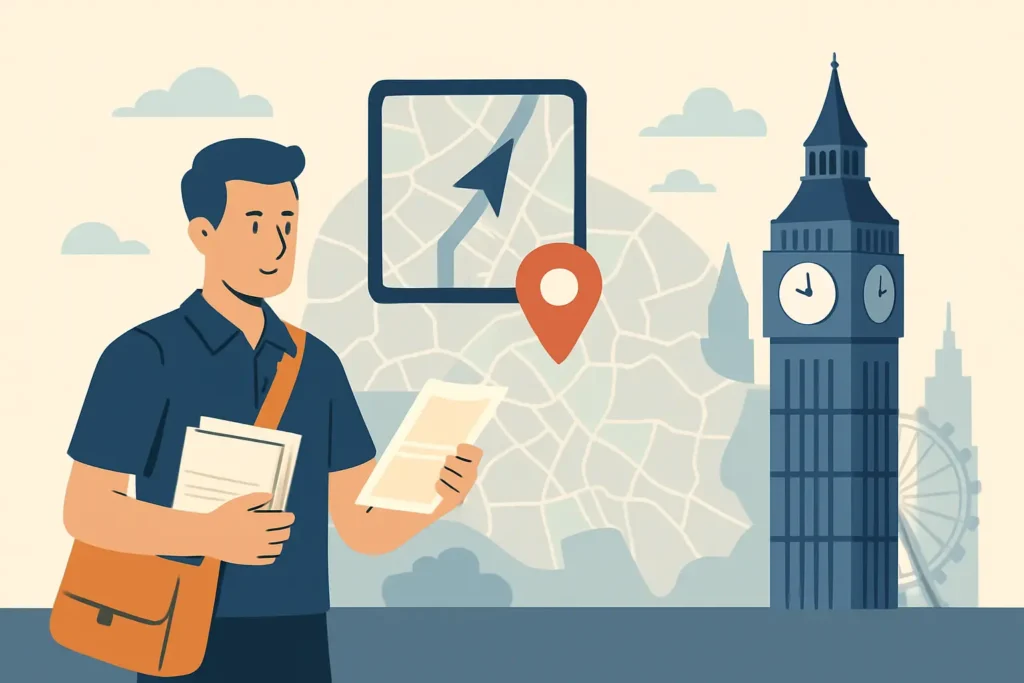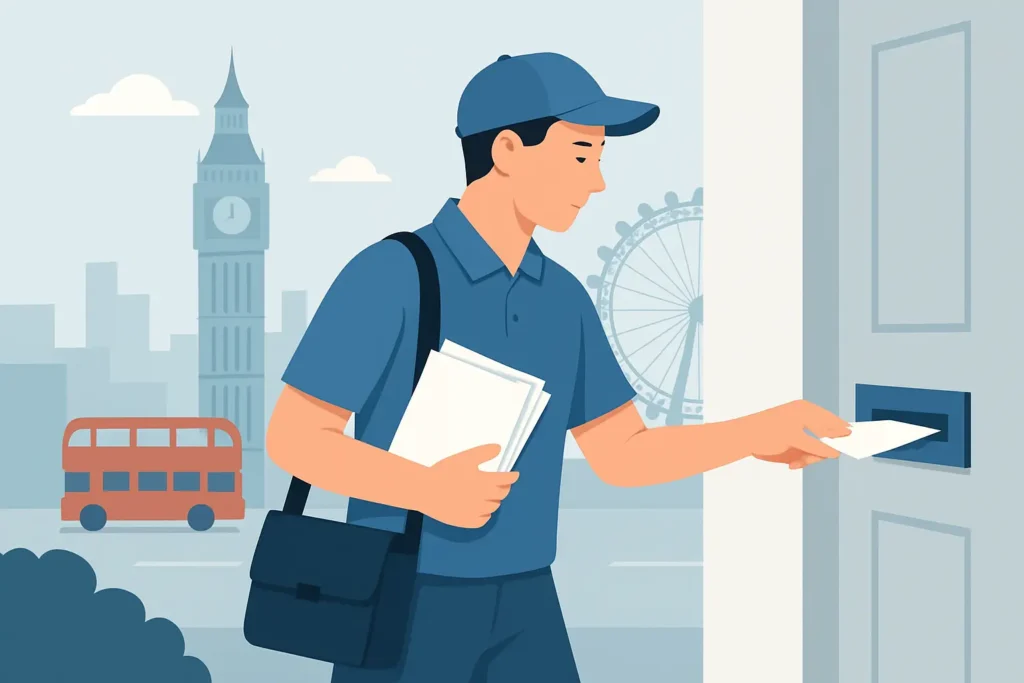
Most leaflet campaigns fail for one boring reason: they land on the wrong doormat.
If you are promoting a local service, a new opening, a limited-time offer, or an event, you do not need “London coverage”. You need the right streets, the right households, and a distribution method that can prove it happened. That is why targeted leaflet distribution by postcode works – when it is planned with the same discipline you would apply to a paid ad campaign.
What “targeted by postcode” actually means
Postcode targeting is not just choosing an area you recognise and hoping for the best. Done properly, it is a way of controlling three things at once: who sees your message, how relevant it feels, and how quickly you can generate responses.
At a basic level, you are selecting delivery zones using postcode sectors (for example, N1 7) or full postcodes where appropriate. But the real value is the logic behind the selection. A good plan links postcode choice to customer behaviour: where people live, how far they are willing to travel, what they are likely to spend, and what they already buy locally.
This is where leaflet distribution beats “awareness” tactics. You are not paying for vague exposure. You are choosing exactly where your offer turns into action.
When postcode targeting makes the biggest difference
If your business depends on local decisions, postcode targeting is a direct route to revenue. Trades and home services usually see the clearest benefit because customers want someone nearby and available soon. Hospitality and gyms do well when the catchment area is realistic – people will not travel across the city for a midweek meal deal.
Retailers and franchises can use postcode targeting to push footfall in specific directions, especially if there is a clear barrier like a river, a busy high road, or a station that changes how people move. Community organisations and events can use it to pack a room fast, because the audience is physically close and the step from “seen” to “attended” is small.
The trade-off is that targeting forces you to commit to a message that fits that neighbourhood. If your offer is broad and you want to test multiple angles, you may need more than one design or version. That is not a problem – it is often how you increase response – but it needs planning.
Choosing the right postcodes: start with the customer journey
A postcode plan should start with one question: what is the quickest reasonable route from leaflet to customer?
If you run an emergency service (locksmith, plumbing, boiler repair), your radius is dictated by response times and trust. People want “local” and “now”. In that case, the best postcodes are typically those closest to your base or the areas where you can reliably deliver fast.
If you run a destination business (restaurant, salon, gym, nursery, specialist clinic), your radius is dictated by habit. People usually choose places that fit their routine. The best postcodes are those aligned with commuting patterns, school routes, and local centres – not necessarily those closest “as the crow flies”.
If you are launching something new, the job changes again. You are not just harvesting demand; you are creating it. Here, postcode selection should prioritise the type of household most likely to try you, and the density needed to create momentum.
A practical way to pressure-test your shortlist is to ask: if someone in this postcode liked the leaflet, would they realistically call today, visit this week, or book this month? If the honest answer is “probably not”, cut it.
Postcode targeting is also about excluding areas
Good targeting is as much about what you avoid as what you include. There will be postcodes that sit technically “nearby” but are the wrong fit because the housing stock is different, the footfall goes elsewhere, or the competition is entrenched.
Excluding low-relevance streets can lift results without changing your creative at all. It also prevents the most common frustration in leaflet campaigns: feeling like you “did a drop” but can not connect it to calls, bookings, or visitors.
Door-to-door vs hand-to-hand: match method to intent
Targeting by postcode is only half of the control. The other half is choosing how the leaflet is received.
Door-to-door works best when you want households to act later. It suits services, bookings, and offers people might keep on the kitchen side. It also gives you consistent coverage within a defined area, which is what most businesses want when they say “targeted”.
Hand-to-hand works best when you want immediate action: an event starting soon, a lunch offer, a pop-up, or a grand opening. It is less about the household and more about the moment. It can still be targeted geographically, but the audience is defined by footfall and timing.
It depends on what your offer demands. If you are asking for a phone call, a quote request, or a booking, door-to-door is usually the better fit. If you are asking someone to walk 200 metres and do something now, hand-to-hand can outperform – provided you pick the right spots and times.
The creative that wins in targeted areas
When you target tightly, you can write and design more directly. You do not need to sound like a national brand. You need to feel relevant to that postcode.
The fastest improvements usually come from clarity, not cleverness. Put the offer and the action upfront. Make the contact method obvious. If you serve the area, say so plainly. People respond when they feel the message was meant for them.
A few practical choices tend to raise response in postcode-targeted drops. A single strong headline beats a list of services. A clear benefit beats a feature. A deadline or limited availability often helps, but only if it is real. And a simple tracking mechanism – like a postcode-specific promo code or a dedicated phone number – turns your leaflet into measurable marketing rather than a guessing game.
The trade-off is that hyper-local creative can date quickly. If your leaflet references a time-limited offer or a specific local hook, you need to be ready to distribute promptly. That is why speed matters as much as design.
Making it measurable: offers, codes, and call handling
Offline marketing becomes much easier to optimise when you can attribute responses.
For postcode campaigns, the simplest approach is to assign different codes to different areas or sectors. You can also use separate phone numbers or landing pages, but even a basic code printed on the leaflet will tell you which postcodes respond.
The key is to make the response mechanism frictionless. If you want calls, your phone must be answered. If you want bookings, the booking path must be quick. If you want footfall, the offer must be redeemable without an argument at the till.
Leaflets do not “not work” as often as businesses fail to capture the demand they create. A missed call is a lost sale that the campaign still paid to generate.
Distribution you can trust: why proof of delivery matters
Targeting only works if the delivery is controlled.
If you can not verify coverage, you can not learn. If you can not learn, you can not scale. That is the real reason GPS tracking, monitoring, and reporting matter – not as a gimmick, but as the foundation for repeatable results.
For businesses running postcode campaigns, accountability is part of the marketing. You want to know the leaflets went where they were meant to go, within the time window you needed, and with enough supervision to prevent gaps.
This is where a managed, end-to-end service helps: consultation to choose areas, creative support to sharpen the offer, printing to keep turnaround tight, and distribution with tracking so you are not relying on assumptions. If you want that level of operational control in London, Wendigo Distribution is built around GPS-tracked delivery, supervised teams, and a money-back guarantee that keeps everyone honest.
Common pitfalls (and how to avoid them)
The most damaging mistake is targeting that is too wide. “Let’s do a few postcodes around us” sounds sensible, but it often dilutes relevance. Tighter areas with a stronger message typically outperform broad coverage with generic copy.
The second mistake is mismatching the offer to the neighbourhood. A premium service pushed into a price-sensitive area can underperform even with perfect delivery. The reverse is also true: a bargain message in a high-value area can attract the wrong customer type.
The third is treating distribution like the only variable. Your leaflet is a sales tool. If the design is cluttered, the offer is vague, or the call-to-action is weak, perfect targeting will not save it.
Finally, timing gets ignored. If your campaign is linked to a season, a local event, or a new opening, late delivery can erase the advantage. Postcode targeting works best when the message arrives at the moment people are ready to act.
A smarter way to think about postcode targeting
The goal is not to “get leaflets out”. The goal is to create a predictable flow of local customers.
When you approach targeted leaflet distribution by postcode like performance marketing, you stop guessing. You select areas based on who will buy, you use an offer that can be measured, and you insist on proof of delivery so you can repeat what works.
The most useful mindset is this: every leaflet is a local decision. Put it in front of the people most likely to say yes, and make it easy for them to do it today.