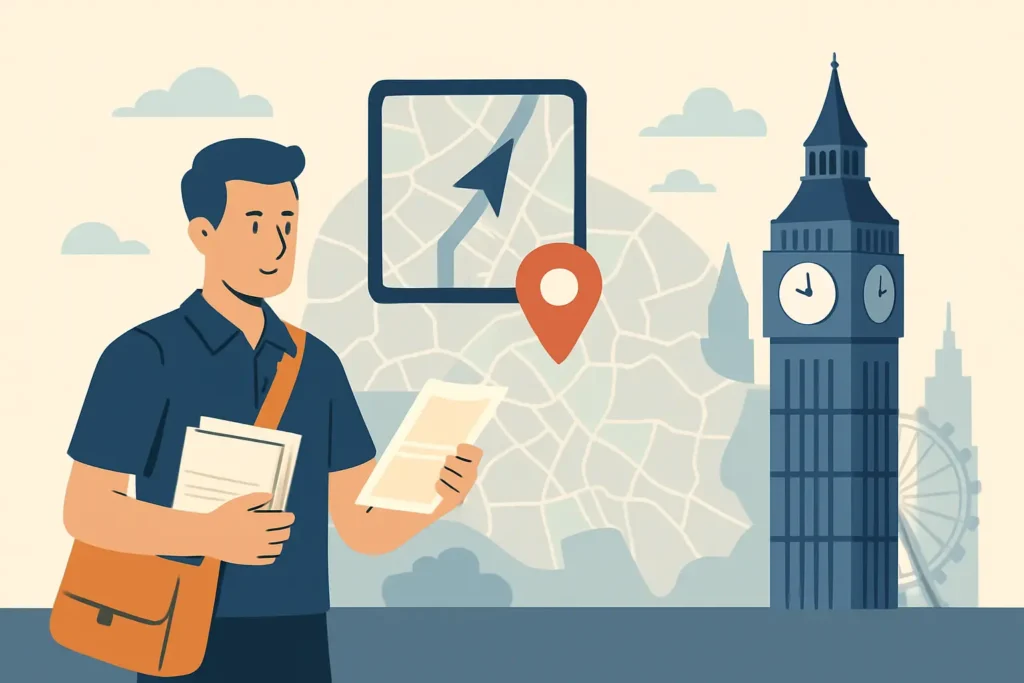
A flyer campaign can fail before the first leaflet leaves the box. Not because the offer is weak or the design is poor, but because the distribution is not compliant. This guide to compliant flyer distribution London businesses can rely on is built for companies that want local reach without wasted stock, complaints, or patchy delivery.
In London, compliance is not just about avoiding problems. It is about control. If you are sending teams into busy high streets, residential streets, stations, retail zones, or mixed-use neighbourhoods, you need a clear process for where material can be distributed, how it is delivered, and how you prove it happened. That is what separates a managed campaign from a gamble.
What compliant flyer distribution in London really means
Compliant flyer distribution is often misunderstood as a narrow legal box-ticking exercise. In practice, it is wider than that. It covers permissions where needed, responsible delivery methods, area suitability, team conduct, and proper supervision throughout the campaign.
For door-to-door work, compliance usually means delivering to the correct residential areas in a controlled way, respecting properties where unaddressed material should not be left, and making sure teams are not simply dumping stock to finish a round. For hand-to-hand activity, the standard is even tighter. Some London locations require permissions or are subject to local restrictions, especially in busier commercial zones or transport-heavy areas.
That matters because one bad decision on location can disrupt the whole campaign. A strong distribution plan starts with the method, the area, and the practical rules on the ground.
Why London needs a stricter approach
London is not one uniform market. A flyer campaign in a suburban residential patch works very differently from one near a shopping corridor, a station exit, or a nightlife zone. Footfall can be high, but that does not automatically make an area right for handouts. The audience may be moving too fast, carrying bags, or simply not suited to the offer.
The city also has a mix of borough rules, private land boundaries, transport hubs, managed estates, and business districts. That creates grey areas for businesses trying to run campaigns without support. What looks like a public space may not be one. What seems like an easy handout point may be restricted. What appears to be broad residential coverage may include blocks or streets that need a more careful approach.
A compliant campaign is built around these realities. It should be planned with local knowledge, not guesswork.
A practical guide to compliant flyer distribution London campaigns
The first step is choosing the right distribution method. Door-to-door is usually the stronger option when you want consistent household coverage across selected postcodes. It gives you more control over geographic reach and is often better for local services, restaurants, estate agents, gyms, trades, and community campaigns.
Hand-to-hand distribution works best when timing and audience fit are more important than pure area saturation. Events, launches, hospitality promotions, and certain retail campaigns can perform well this way, but only when the team is placed correctly and operating in suitable locations.
Once the method is set, the next question is targeting. Compliance and targeting go together. If you push flyers into the wrong area just to increase volume, response tends to fall and risk increases. Better targeting means selecting neighbourhoods that match the likely customer, whether that is families, commuters, students, high street shoppers, or homeowners.
For example, a family-focused service may perform better in established residential areas such as Enfield, Palmers Green or parts of Chingford than in fast-moving commuter zones. A campaign for lunch offers or local retail may need a very different plan. Distribution should follow the customer, not just the map.
Permissions, restrictions and local judgement
This is where many businesses come unstuck. They assume all flyer distribution is treated the same. It is not.
Hand-to-hand campaigns need the most attention. Depending on the borough or the exact location, permissions may be required. Areas near stations, shopping precincts, major junctions, private forecourts, and managed public spaces can all have restrictions. A compliant operator checks this before a team is deployed, not after complaints start.
Door-to-door distribution has fewer moving parts, but it still needs standards. Teams should be trained to deliver properly, avoid careless drops, and respect local conditions. Flats, gated properties, mixed-use buildings, and commercial-residential streets all require judgement. If your campaign is simply handed to casual staff with no supervision, there is far more room for missed streets and poor practice.
That is why campaign control matters as much as permissions. Compliance is not only about where teams can go. It is about what they actually do once they are there.
Why proof of delivery matters
A campaign is only as good as the evidence behind it. If you cannot verify coverage, you are relying on trust alone. For a business spending time and stock on local acquisition, that is not good enough.
GPS-tracked distribution gives you a much clearer view of whether the agreed streets or routes were covered. It also discourages shortcuts. When teams know their activity is being monitored and supervised, standards improve. Reporting then gives the client something concrete to review after the campaign, rather than vague claims that the job was completed.
This is especially important in London, where route density and street layouts can make it easy for unsupervised teams to miss parts of an area. A proper tracking and reporting system adds accountability from start to finish.
Creative choices can affect compliance too
Most people think of compliance as a field issue, but the flyer itself also plays a part. If the message is misleading, unclear, or poorly targeted, the campaign creates friction even if the delivery is technically sound.
Your leaflet should say exactly what you offer, who it is for, and what action the reader should take. If you are promoting a time-sensitive offer, event date, or location-specific service, clarity matters. Vague copy causes confusion. Overloaded layouts get ignored. Weak calls to action reduce response and make coverage harder to measure.
A well-prepared campaign also uses trackable elements such as unique phone numbers, offer codes, or simple response hooks. That helps connect distribution activity to real enquiries. Good distribution gets the leaflet through the door. Good campaign planning helps it produce a result.
Common compliance mistakes businesses make
The biggest mistake is treating distribution as an afterthought. A business invests in design and print, then chooses delivery on convenience alone. That usually leads to weak control, poor visibility, and inconsistent coverage.
Another common issue is confusing volume with effectiveness. More leaflets do not automatically mean better results. If the wrong areas are selected, or if teams are placed in unsuitable locations, response drops quickly. Compliance suffers when campaigns are rushed into the field without route planning or local checks.
There is also a tendency to underestimate supervision. Businesses assume a team will simply carry out instructions. In reality, field distribution needs oversight. London is busy, unpredictable, and full of small on-the-ground decisions. Supervision helps keep standards consistent across the full campaign.
What a properly managed campaign looks like
A compliant flyer campaign should feel controlled from the beginning. It starts with a clear brief, sensible area selection, and a distribution method that suits the objective. The creative is prepared for local response, the delivery plan is mapped properly, and any permission-sensitive activity is checked before launch.
From there, the campaign needs active management. Teams should be monitored, routes should be verified, and reporting should be available afterwards. If a provider cannot show you how they maintain standards in the field, that is a warning sign.
This is where a service-led distribution partner adds value. Businesses do not need more stock moving around London. They need a campaign that is organised, compliant, and accountable from planning through to final reporting. That is how local promotion becomes a repeatable growth channel rather than a one-off punt.
Compliance and performance should work together
Some businesses worry that stricter compliance slows a campaign down. In reality, it usually improves performance. Better planning means better targeting. Better supervision means more reliable coverage. Better reporting means you can judge what worked and improve the next drop.
There are trade-offs, of course. A high-footfall location may look attractive but be less suitable than a tighter, more relevant route. A broad residential spread may reach more homes, but a focused patch can produce stronger local response. It depends on the offer, the audience, and how quickly you want to see traction.
The key is to avoid treating compliance as a barrier. It is part of doing the job properly.
For London businesses that want maximum reach with real accountability, the strongest flyer campaigns are the ones built with control at every stage – from area targeting and permissions to GPS tracking, supervision, and proof that the work was actually done. If you want your next campaign to deliver more than just hopeful coverage, start by demanding a distribution process that stands up to scrutiny.