A stack of leaflets on your desk means nothing if they never reach the right streets.
That is the real issue when businesses compare leaflet distributors in London. The question is not simply who can deliver printed material. It is who can target the right areas, manage the campaign properly, and prove the work was actually done. If you run a local business, a franchise, a venue, or a time-sensitive promotion, distribution is not a side task. It is the part that turns print into response.
What good leaflet distributors in London actually do
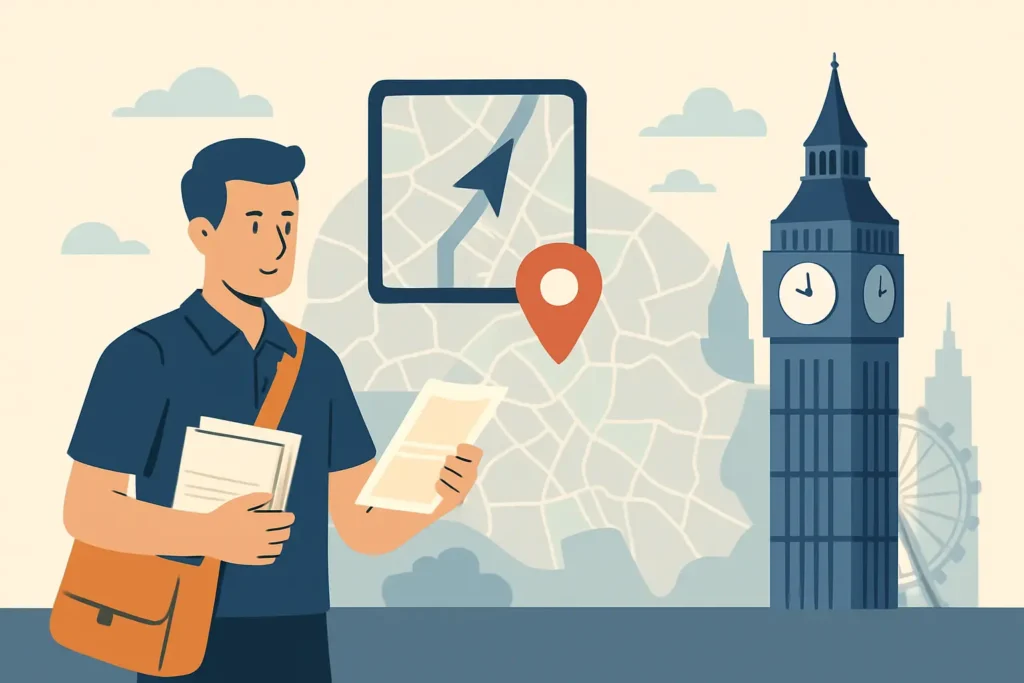
A reliable distributor should do far more than collect boxes and send a team out. Good distribution starts before a single leaflet is printed. The better providers will ask what you are promoting, who you want to reach, which postcodes matter, and what kind of response you need. That matters because a leaflet campaign aimed at local families works very differently from one aimed at commuters, students, or restaurant-goers.
In London, this becomes even more important. Boroughs vary sharply in housing type, footfall, travel habits, and customer behaviour. One area may suit door-to-door delivery because households are tightly packed and highly residential. Another may perform better with hand-to-hand distribution near stations, high streets, or event spaces. A distributor that treats all areas the same is usually one that is focused on volume rather than results.
The right partner should also help shape the campaign itself. That can include advice on leaflet format, messaging, offer structure, and timing. If your promotion is weak or your area selection is off, even a perfectly completed drop can underperform. Distribution is execution, but strong execution starts with proper planning.
Why accountability matters more than big promises
Anyone can say they cover London. The harder question is how they control the work on the ground.
Leaflet distribution is one of those services where confidence often comes from proof, not sales talk. If you are trusting a third party to represent your business door to door or face to face, you need to know there is supervision in place. GPS tracking is one of the clearest signs that a company takes delivery seriously. It gives you a record of where teams have been and helps remove guesswork from the process.
That level of monitoring is especially useful in London, where campaigns are often tightly targeted. If you want coverage in selected postcodes, around a catchment area, or within a defined radius of your business, proper tracking helps confirm the planned route matches the completed route. It also creates a stronger standard internally. Teams are more likely to work carefully when they know delivery is being monitored and checked.
A money-back guarantee also says something important. It shows the company is willing to stand behind its process rather than hide behind vague language. Not every campaign issue can be reduced to delivery alone, because results depend on the offer, design, timing, and audience. But when a distributor guarantees the execution, it gives you a stronger level of protection and a clearer basis for trust.
Door-to-door or hand-to-hand?
This depends on what you are trying to achieve.
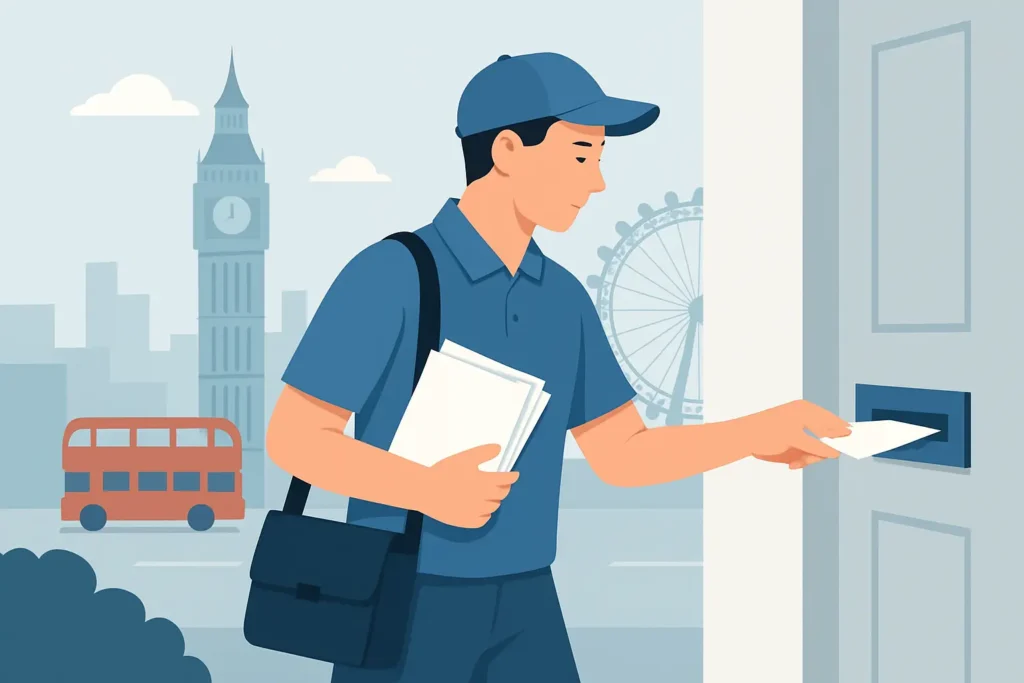
Door-to-door distribution is usually the better fit when you want broad local coverage in residential areas. It works well for trades, estate agents, takeaway promotions, healthcare providers, local retailers, gyms, and community campaigns. It gives your brand a physical presence in the home, where people can act on it later. If your service is relevant to households rather than passing footfall, this approach often makes the most sense.
Hand-to-hand distribution is more immediate. It can work very well for events, hospitality, launches, student campaigns, gym offers, and promotions tied to specific locations or times of day. The trade-off is that it relies more heavily on footfall quality, staff approach, and timing. A rushed or poorly managed handout can produce weak engagement even in a busy location.
The best distributors will not push one method for every campaign. They will look at your objective first. Sometimes the strongest approach is a combination – residential coverage in your core trading area, supported by hand-to-hand activity where your target audience already moves.
The signs a distributor is worth trusting
You do not need to be a marketing specialist to spot whether a provider is likely to do the job properly.
Start with how they talk about planning. If the conversation stays vague, that is a warning sign. A professional distributor should be able to discuss targeting, quantities, delivery method, scheduling, and campaign goals with confidence. They should speak in practical terms, not in generic promises.
Next, look at operational control. Ask how distribution is monitored, how teams are supervised, and what reporting you receive afterwards. If the answers are unclear, you may end up paying for activity that is difficult to verify.
It also helps to see whether they offer a managed service rather than just a delivery slot. For many businesses, especially those running local campaigns for the first time, support with design, copy, print, and area selection makes the process easier and stronger. It reduces the risk of producing a leaflet that looks fine but fails to generate action.
A dependable provider should also move quickly and communicate clearly. Many leaflet campaigns are tied to openings, seasonal demand, events, or short lead times. Slow response or poor coordination at the start usually does not improve once the campaign is live.
Common mistakes businesses make when choosing leaflet distributors in London
The biggest mistake is choosing based on convenience alone. A fast yes from a supplier is not the same as a controlled campaign. If there is no real planning behind the distribution, you may get activity without useful coverage.
Another common issue is over-focusing on print while underestimating delivery. Businesses often spend time refining artwork, then treat distribution as the simple final step. In practice, poor delivery can waste good creative just as easily as poor design can weaken good delivery.
There is also the problem of unclear targeting. London offers huge reach, but broad reach is not always the same as useful reach. If your campaign should focus on specific postcodes, household types, or local catchments, your distributor needs to understand that from the start. Blanket coverage may sound attractive, but it is not always the smartest route.
Finally, many businesses fail to build a measurable response mechanism into the leaflet itself. If you want to judge campaign performance properly, use a clear call to action. That might be a promo code, a dedicated phone number, a landing page, or a time-limited offer. Good distribution gets your leaflet through the door. Good campaign planning gives people a reason to respond.
What a managed campaign should feel like
The strongest distribution services remove uncertainty.
You should know what areas are being targeted, what method is being used, when distribution is taking place, and how completion will be monitored. You should not be left chasing updates or guessing whether the job is on track. A properly managed campaign gives you control without creating more internal work.
That is especially valuable for busy London businesses. Owners, marketing managers, and operations leads rarely have time to coordinate designers, printers, route plans, and delivery teams separately. A done-for-you approach makes the campaign more efficient and reduces the chance of details slipping through the gaps.
This is where a provider such as Wendigo Distribution stands out. When consultation, targeting, creative support, print coordination, GPS-tracked delivery, and reporting are handled as one managed process, the campaign is easier to launch and easier to trust. That level of control is not just operationally cleaner. It gives your leaflet campaign a better chance of producing real local response.
Choosing for results, not just coverage
The best leaflet distributors in London do not simply move paper from one place to another. They help businesses reach the right households, the right streets, and the right people with proper oversight from start to finish.
If you are comparing providers, look past the surface claims. Ask how they target, how they supervise, how they report, and how they help you turn a printed piece into a response-driven campaign. Coverage matters, but accountable coverage matters more.
A leaflet campaign works best when every part of it is aligned – the area, the message, the timing, and the delivery. Get those right, and print becomes a practical growth channel rather than a gamble.