A local offer has a short window to make an impact. A new opening, seasonal menu, limited event date or service launch cannot wait for people to search for it by chance. That is why use brochure distribution remains a practical question for London businesses focused on visible, local customer acquisition. It puts a clear message directly into the hands or homes of people who can act on it.
For businesses that serve defined neighbourhoods, a well-managed brochure campaign creates reach that is difficult to replicate through a single digital channel. The right households see your brand, your offer and the next step in one physical piece of marketing. The key is not simply printing brochures. It is targeting the right areas, delivering reliably and giving people a reason to respond.
Why use brochure distribution for local marketing?
Brochures give you room to explain more than a headline. A restaurant can show its menu and opening offer. A home improvement business can demonstrate the type of work it carries out. A school, charity or community organisation can set out dates, services and contact details without forcing people to hunt for information.
That extra space matters when trust is part of the buying decision. Many local services are chosen carefully, particularly those involving a person’s home, family, health or regular spending. A professionally designed brochure can present real benefits, clear credentials, imagery and a direct call to action in a format people can keep, return to and share.
Unlike an advert that disappears as someone scrolls, a brochure stays in the home. It may be placed on a kitchen counter, kept in a bag or passed to another member of the household. Not every recipient will respond immediately, but repeat local visibility helps your business become familiar before the need arises.
Reach households that can actually use your service
London is not one market. It is a collection of high streets, estates, residential roads, business districts and communities with different needs. A campaign aimed at family homes near a tutoring centre needs a different footprint from one promoting a gym, takeaway, salon, tradesperson or local event.
Brochure distribution allows you to select areas based on your trading radius and likely customer profile. That could mean concentrating on postcodes around a new venue, reaching streets close to a service area, or building coverage across several neighbourhoods where demand is proven. Rather than spreading your message thinly, you can put volume behind the locations most likely to generate enquiries.
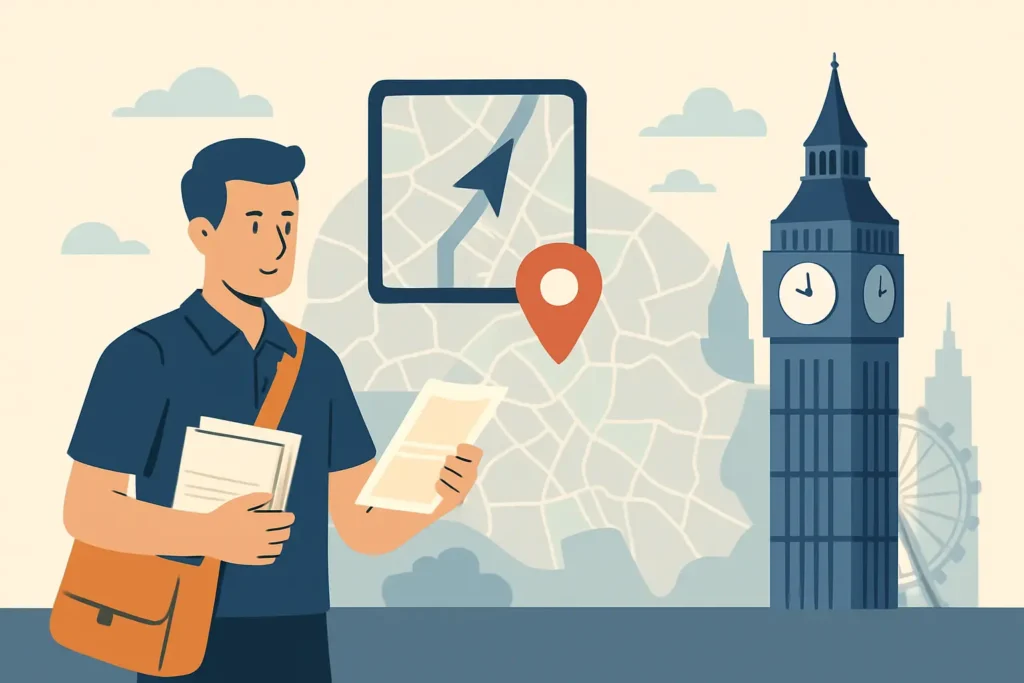
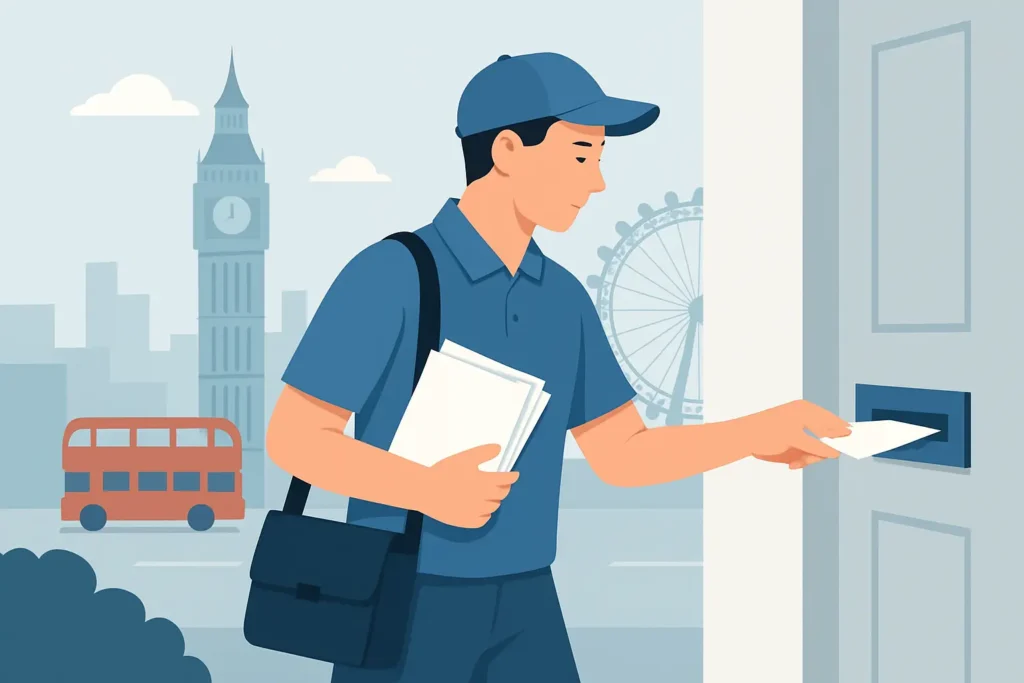
This is particularly useful for businesses that need a fast local push. A café in Walthamstow, an installer serving Enfield or a venue with an upcoming opening in East London can create awareness where it counts before the opportunity passes. Door-to-door distribution gives broad household coverage, while hand-to-hand distribution can suit busy streets, stations, shopping areas and event-led activity.
The best method depends on the campaign. Door-to-door is often stronger when the aim is to establish neighbourhood-wide awareness and reach decision-makers at home. Hand-to-hand can work well where timing and footfall matter, such as a lunch offer, retail promotion or event invitation. A managed campaign can use one approach or combine both where the audience and objective justify it.
A brochure makes the offer easier to understand
People are more likely to act when the message is simple. Brochure distribution works best when the reader can quickly answer three questions: what is this, why should I care and what should I do next?
A strong brochure leads with the customer benefit, not a vague description of the business. It then supports that promise with the details needed to make a decision. This may include the service area, a limited-time offer, a booking method, opening times, examples of work, testimonials or a promotional code.
Trying to say everything is a common mistake. A brochure should be informative, but it should not make the reader work. One main message and one primary action usually outperform a page crowded with competing offers. If your goal is bookings, make booking easy. If the goal is a visit, make the location and reason to visit immediately clear.
Creative quality also affects credibility. Poorly printed materials, cramped copy or unclear contact details can undermine even a good offer. That is why design, copywriting, printing and distribution should be considered as one campaign rather than disconnected tasks. The brochure needs to look right, communicate clearly and arrive in the right places.
It creates measurable offline activity
One objection to printed marketing is that it cannot be measured. That is only true when a campaign is sent out without a response plan. Brochure distribution becomes far more accountable when you build tracking into the offer.
Use a unique promotional code, a dedicated telephone number, a specific landing page reference or a clear instruction for customers to mention the brochure. These methods help you identify which campaign generated the call, booking or visit. They also reveal which offers and areas deserve further attention.
Measure more than immediate sales. Track enquiries, calls, web visits, voucher redemptions, booked consultations and in-store mentions. Some campaigns prompt a direct response that week; others build recognition that influences a decision later. Comparing response patterns over several drops gives a more useful view than judging every brochure solely on the first day.
Distribution itself must be measurable too. Businesses should know that their materials reached the selected streets, rather than assuming the job was completed. GPS-tracked distribution, active supervision and clear reporting provide evidence of coverage. This operational control matters because even the strongest brochure cannot perform if it never reaches the intended household.
Reliability protects your marketing budget
A brochure campaign relies on execution. If bundles are mishandled, delivery teams are not supervised or key streets are missed, the campaign loses its purpose. Reliable distribution is not an added extra. It is the foundation of the result.
A professional provider should plan the campaign before delivery begins, brief trained teams, monitor their routes and report on completion. GPS tracking provides visibility over distribution activity, while hands-on supervision helps maintain standards in the field. A money-back guarantee gives further reassurance that accountability is built into the service, not treated as an afterthought.
For a busy owner or marketing manager, this removes the need to recruit temporary staff, allocate internal time to route planning or chase multiple suppliers. An end-to-end partner can support the campaign from initial consultation through area targeting, creative preparation, print and final delivery. You retain control over the message and objective while the operational work is managed properly.
When brochure distribution is most effective
Brochure distribution is especially valuable when your business has a defined local audience and a clear reason for people to act. It suits new openings, service launches, recruitment drives, menu promotions, classes, local events, seasonal campaigns and businesses looking to increase awareness in selected areas.
It is less effective when the offer is unclear, the business cannot serve the area reached, or there is no practical way for a customer to respond. Distribution is not a substitute for a good proposition. If the brochure promises something customers want and the business is ready to handle the response, it can generate meaningful local momentum.
Frequency also plays a role. One drop can introduce your brand, but repeated distribution often builds stronger recall. A resident may ignore the first brochure because the timing is wrong, then respond to the next one when the need becomes relevant. Repetition should be planned around real business cycles, such as school terms, moving seasons, holidays, event dates or opening periods.
Turn local reach into action
The value of brochure distribution is straightforward: it gives local businesses a controlled way to put a persuasive offer in front of real people in the places they serve. With accurate area selection, professional creative and monitored delivery, it becomes a practical route to enquiries, visits and stronger recognition.
Wendigo Distribution manages brochure campaigns across London with GPS-tracked delivery, supervised teams and reporting that gives businesses confidence in their coverage. Whether you need a focused neighbourhood drop or wider volume across selected postcodes, the campaign should be built around the customers you need next.
Before printing, decide what one action you want the reader to take and how you will measure it. That simple decision will shape a brochure that does more than reach local homes – it gives local people a clear reason to choose you.