A local campaign usually fails long before the first leaflet lands on a doormat. It fails when the wrong streets are chosen, the offer is too vague, or nobody can prove the delivery happened properly. Local acquisition with leaflet drops works when every part of the campaign is controlled – from postcode targeting to tracked distribution to a clear response mechanism that tells you what is working.
For London businesses, that matters. If you run a restaurant, estate agency, gym, dental practice, tutoring service or local retail offer, you do not need blanket awareness across the whole capital. You need the right households and the right footfall catchment seeing your message at the right time. A well-run leaflet campaign does exactly that, and it does it quickly.
Why local acquisition with leaflet drops still works
Leaflet distribution remains effective for one simple reason. It reaches people where local buying decisions happen – at home, in the neighbourhood, close to the point of action. A paid search campaign can capture demand when someone is already looking. A leaflet drop can create that demand in the first place.
That is especially useful for businesses with a tight trading radius. A coffee shop opening in Hackney, a salon in Wood Green, or a new fitness class in Enfield does not need national reach. It needs repeat visibility within the surrounding streets, blocks and commuter routes. Print placed directly into those homes keeps the message physical, local and hard to ignore.
There is also a trust factor. People tend to respond differently to a leaflet from a business that feels nearby and relevant. A local offer, clearly presented and professionally distributed, signals presence. It says: we operate here, we serve this area, and we want your custom now.
What makes a leaflet drop campaign produce customers
The format itself is not enough. Plenty of leaflet campaigns underperform because they are treated as a simple delivery task rather than a managed acquisition channel. The difference is planning and control.
Area targeting matters more than volume alone
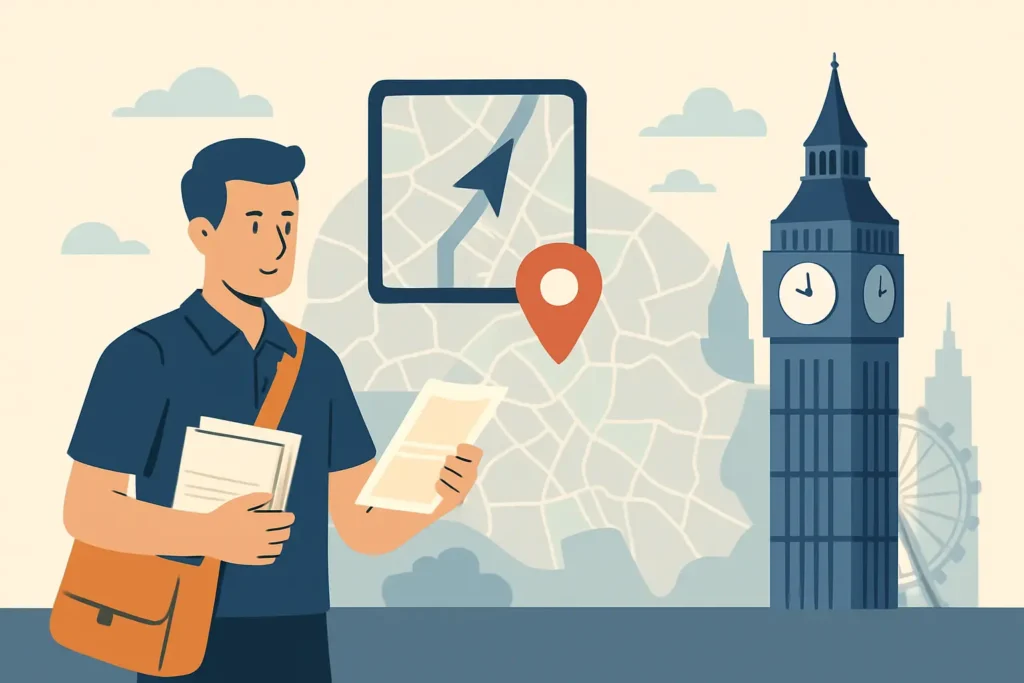
If you distribute to the wrong households, wider coverage will not fix the problem. Good local acquisition starts with selecting the areas most likely to convert. That could mean households within walking distance, roads with stronger family demographics, neighbourhoods that match a premium service, or postcodes near a new branch.
In London, this becomes even more important because local patterns change quickly. A campaign around Finsbury Park will not behave the same way as one in Harrow or Stratford. Housing type, commuter movement, high street density and local competition all affect response. Smart targeting is what turns a leaflet drop from waste into reach.
The offer has to give people a reason to act
Many businesses try to say too much. The leaflet becomes a list of services with no urgency and no clear next step. Better campaigns focus on one strong message. That might be an opening promotion, a free consultation, a seasonal menu launch, a limited-time class pass or a simple introductory incentive.
The point is not clever wording for its own sake. The point is getting a local person to do something measurable. Call. Book. Visit. Scan. Bring the leaflet in. Use the promo code. If the action is unclear, the result usually is too.
Distribution quality is not a small detail
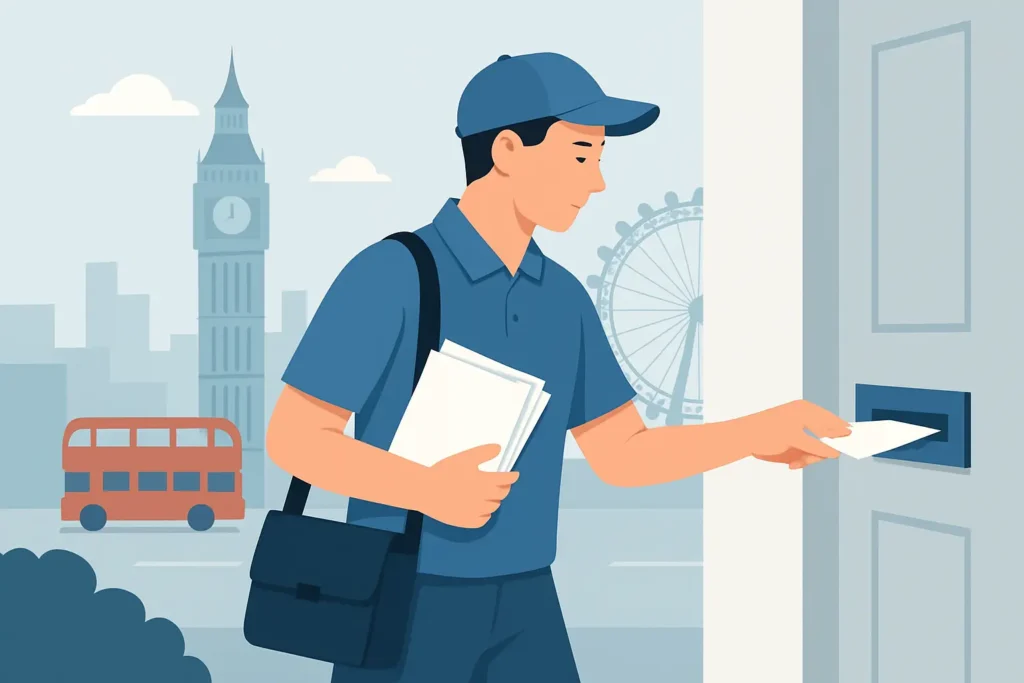
This is where many campaigns break down. A business can invest time in design, targeting and print, then lose the result through poor delivery standards. If leaflets are not supervised properly, if routes are rushed, or if there is no tracking, you are left hoping the campaign happened as planned.
That is not good enough when customer acquisition is the goal. Reliable leaflet distribution should include clear operational oversight, GPS-tracked delivery and reporting that shows where the campaign ran. Accountability matters because it protects the result, not just the process.
How to use leaflet drops for fast local acquisition
The best leaflet campaigns are usually built backwards from the customer action you want. Start there, then shape the delivery around it.
Start with a realistic catchment area
Most local businesses know their broad trading area, but not always their best-performing one. There is a difference. Your best area may be where people already recognise the brand, where travel time is easy, or where the service matches local need.
For example, a takeaway may want to focus on delivery-friendly streets within a manageable radius. A childcare provider may want family-heavy residential roads. A local event may need hand-to-hand support near transport hubs alongside door-to-door coverage in nearby neighbourhoods. The right catchment is based on response potential, not guesswork.
Match the leaflet to the audience
A premium home service should not look like a nightclub promotion. A family entertainment offer should not read like a legal notice. The message, design and copy need to fit the buyer and the setting.
This is where managed campaigns outperform ad hoc ones. When design, print and distribution are planned together, the leaflet is created for the way it will actually be used. That leads to cleaner messaging, better local relevance and stronger conversion.
Build in a response marker
If you cannot track response, you cannot improve the campaign. Use a code, a dedicated phone line, a landing page reference, a bring-this-leaflet offer or a staff prompt at point of sale. None of this needs to be complicated, but it does need to be deliberate.
For local acquisition, simple often works best. A clearly printed offer code or callout can tell you which area responded, which creative performed better and whether a repeat drop is justified.
The trade-off between reach and precision
Not every campaign needs the same approach. Sometimes broad coverage makes sense, especially for launches, opening announcements or awareness pushes across several adjoining districts. Other times, precision is the better move, especially when the service is niche or the catchment is narrow.
That is the real trade-off. Wider coverage can put your name in more homes, but targeted distribution can produce stronger response from the homes that matter most. It depends on the business type, the objective and the timing.
A local gym opening in Tottenham Hale may want broad nearby awareness first, then a tighter second drop around the postcodes that responded best. A dental clinic in Chingford might focus on a more selective household profile from the start. Good planning accepts that local acquisition is rarely one-size-fits-all.
Why proof of delivery matters to serious marketers
Offline marketing should not mean blind marketing. Businesses want confidence that their campaign was carried out properly, especially when internal teams are too busy to supervise street-level execution.
GPS tracking and monitored distribution give that confidence. They show that the campaign was delivered in the intended areas and help remove the uncertainty that has damaged the reputation of leaflet distribution in the past. For business owners and marketing managers, that level of proof is not a nice extra. It is part of what makes leaflet drops viable as a serious acquisition channel.
That is one reason managed providers stand out. When supervision, reporting and accountability are built into the service, the campaign stops being a gamble and becomes a controlled local marketing activity.
Where leaflet drops fit in a wider local campaign
Leaflet distribution works particularly well when it supports another action people can take straight away. Someone sees your leaflet at breakfast, searches the business on their mobile phone later, then visits that weekend. Another household keeps the leaflet on the kitchen side until they need the service. A restaurant offer prompts a same-day order. A promo code helps connect the response back to the area.
This is why local print should not be dismissed as old-fashioned. It often does the heavy lifting of awareness and recall in a specific postcode, while search, social or in-store experience closes the sale. When businesses understand that relationship, leaflet drops become much more than a delivery exercise.
For London campaigns, speed also matters. Markets move quickly, weather changes plans, competitors launch offers and local events create short windows of attention. A campaign that can be planned, produced and distributed with control gives businesses a practical advantage.
Wendigo Distribution works in that space – helping London businesses run leaflet campaigns with targeted area selection, tracked delivery and hands-on execution that supports measurable local growth.
The businesses that get the best results from leaflet drops are usually the ones that treat them seriously. Pick the right area, make the message clear, insist on accountability and give people a reason to respond. Do that well, and local acquisition stops being hopeful marketing and starts becoming a repeatable part of growth.