If you are paying for thousands of leaflets to go through the right doors, “what is gps tracked distribution” is not a technical question. It is a practical one. You want proof that your campaign was delivered where it was meant to be delivered, and you want that proof without chasing, guessing or hoping your distributor got it right.
GPS tracked distribution is leaflet or flyer delivery monitored through location data captured while distributors are out on the round. In simple terms, it shows where a team has walked, when they were there and whether the agreed streets or zones were covered. For businesses using door-to-door or hand-to-hand distribution, that changes the service from a promise into something that can be checked.
What is GPS tracked distribution in practical terms?
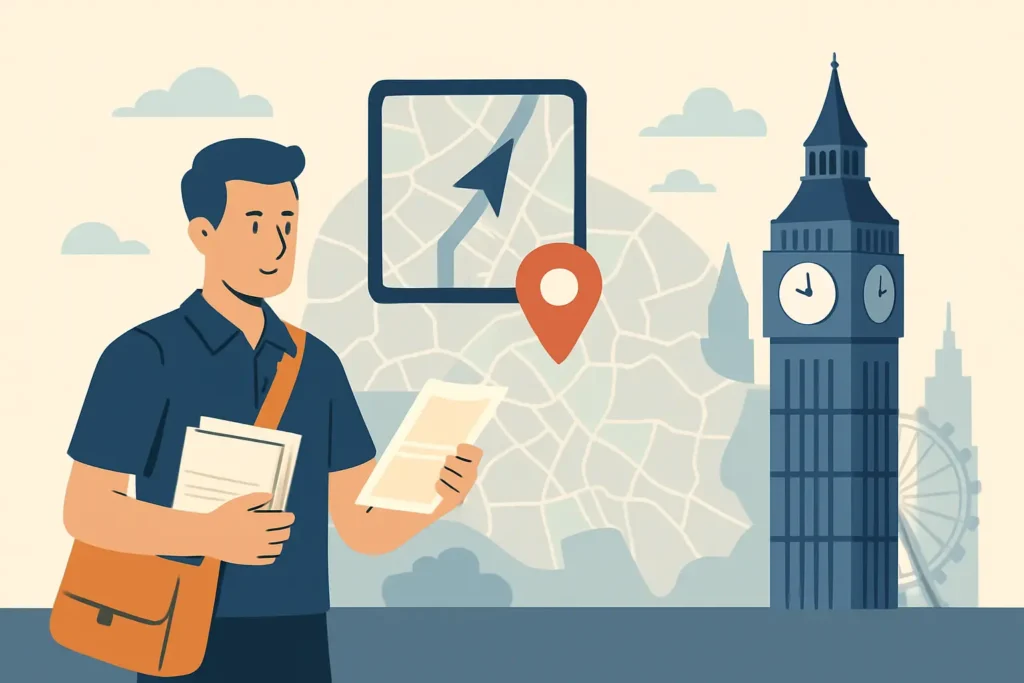
At ground level, GPS tracked distribution means a distributor carries a tracked device or uses a system that records their route during the campaign. As they move through the target area, the route is logged and later reviewed against the agreed delivery map.
That matters because distribution is only valuable when it reaches the right households, streets or footfall locations. A printed offer can be well designed, well timed and relevant, but if the delivery is patchy, the campaign suffers before it has a chance to perform.
For a business owner or marketing manager, GPS tracking gives a clearer answer to a basic question – did the delivery actually happen where we said it should? It helps replace vague updates with route-level evidence.
How GPS tracked distribution works
A proper GPS tracked campaign starts before a single leaflet is handed out. The target area is defined first. That might be a set of postcodes, selected streets, neighbourhoods that match your audience, or a hand-to-hand zone with steady footfall.
Once the map is agreed, the distribution team follows that plan in the field. Their movement is recorded while they deliver. Afterward, the route data is checked by supervisors or account handlers against the planned area. If there are missed streets, unusual gaps or signs that a route was not completed properly, that can be flagged and dealt with.
The best systems do not rely on tracking alone. GPS is strongest when it is paired with active supervision, route planning and post-campaign reporting. Tracking shows movement, but management turns that movement into accountability.
That distinction matters. GPS is not magic. It does not, by itself, prove that every single leaflet went through every single letterbox. What it does provide is strong operational evidence that a team covered the intended area at the intended time. When combined with supervision and clear processes, it becomes a reliable control measure rather than a gimmick.
Why businesses ask what is GPS tracked distribution
Most businesses ask the question after they have already had a poor experience. They may have booked a leaflet campaign and received little more than a verbal assurance that it was completed. They may have seen weak response and had no way of knowing whether the issue was the offer, the targeting or the delivery itself.
GPS tracking helps remove one of those unknowns. If the campaign underperforms, you can look at the distribution evidence and make a better judgement about what happened. Was coverage complete? Were the right areas selected? Was the message wrong for the audience? Without delivery proof, all of that becomes guesswork.
For experienced marketers, this is about control. For first-time buyers, it is often about confidence. Either way, the benefit is the same – you get a distribution campaign that is easier to trust and easier to assess.
What GPS tracked distribution does and does not prove
This is where a lot of confusion starts, so it is worth being direct. GPS tracked distribution proves route coverage. It shows where a distributor travelled and whether the delivery path matches the planned campaign area.
It does not prove customer attention, offer appeal or conversion. It also does not guarantee that every household will respond. A leaflet can be delivered correctly and still underperform if the audience targeting is off, the creative is weak or the timing is poor.
That is not a flaw in GPS tracking. It is simply the reality of direct marketing. Distribution is one part of the campaign, not the whole campaign. The value of GPS is that it gives you confidence in that part.
Why GPS tracked distribution matters for leaflet campaigns
Leaflet distribution is often judged unfairly because the delivery stage is invisible. With digital ads, you can see impressions, clicks and spend. With print, people sometimes assume there is no equivalent layer of accountability. That is exactly why GPS tracking matters.
It gives offline marketing a form of operational reporting. You can see that the agreed route was covered. You can compare planned streets against actual routes. You can spot whether the team was active at the right times and in the right locations.
For local campaigns, that is especially useful. If you are targeting households around a new branch, promoting a local service or driving footfall to a venue, coverage in the wrong area is wasted effort. GPS tracking helps keep the campaign tied to the geography that matters.
In busy places such as London, that level of control becomes even more valuable. Delivery areas can be dense, mixed and highly specific. A campaign might need to focus on a tight catchment rather than broad coverage, and tracked distribution helps keep execution aligned with that plan.
What good GPS tracked distribution looks like
Not every provider uses tracking in the same way. Good GPS tracked distribution is planned, supervised and reported properly. The technology supports the service, but it should never replace hands-on management.
A strong campaign usually includes a clearly defined target area, trained distributors, route monitoring, oversight during the campaign and post-distribution reporting. If a business claims GPS tracking but cannot explain how routes are checked or what happens when there is a problem, that is a weak sign.
You should also expect the tracking to fit the campaign type. Door-to-door distribution and hand-to-hand campaigns are not managed in exactly the same way. One is about street-by-street residential coverage. The other is about putting material into the hands of the right people in the right high-footfall spots. The reporting and supervision should reflect that difference.
Is GPS tracked distribution always necessary?
For most serious leaflet campaigns, yes, but the degree of importance can vary. If you are sending a modest local drop and simply want broad presence, you may be less concerned with route scrutiny than a brand rolling out multiple targeted zones or testing postcode-level performance.
That said, once you have seen tracked reporting, it is difficult to go back to blind distribution. The issue is not whether tracking guarantees results. It is whether you want visibility over the delivery work you are paying for.
For brands that need speed, measurable reach and confidence in execution, GPS tracking is no longer a nice extra. It is a sensible standard.
What is GPS tracked distribution really buying you?
More than anything, it buys accountability. It gives structure to the campaign and creates a record that can be reviewed rather than merely described. That is valuable for single-site businesses trying to generate local enquiries, and just as useful for larger organisations that need consistency across multiple areas.
It also supports better decision-making. When distribution is tracked, your future planning improves. You can repeat strong areas, refine weak ones and line up delivery evidence with response data such as calls, voucher redemptions or promo code use.
For a managed campaign, that is the bigger point. Good distribution is not just about dropping leaflets. It is about making sure the right message reaches the right area with enough oversight to trust the outcome.
A service-led provider such as Wendigo Distribution builds that accountability into the campaign from the start, with GPS tracking, supervision and reporting forming part of the delivery process rather than an afterthought.
If you are asking what GPS tracked distribution is, the simplest answer is this: it is proof that your campaign has been carried out with control. And when you are trying to win local customers quickly, proof matters just as much as reach.