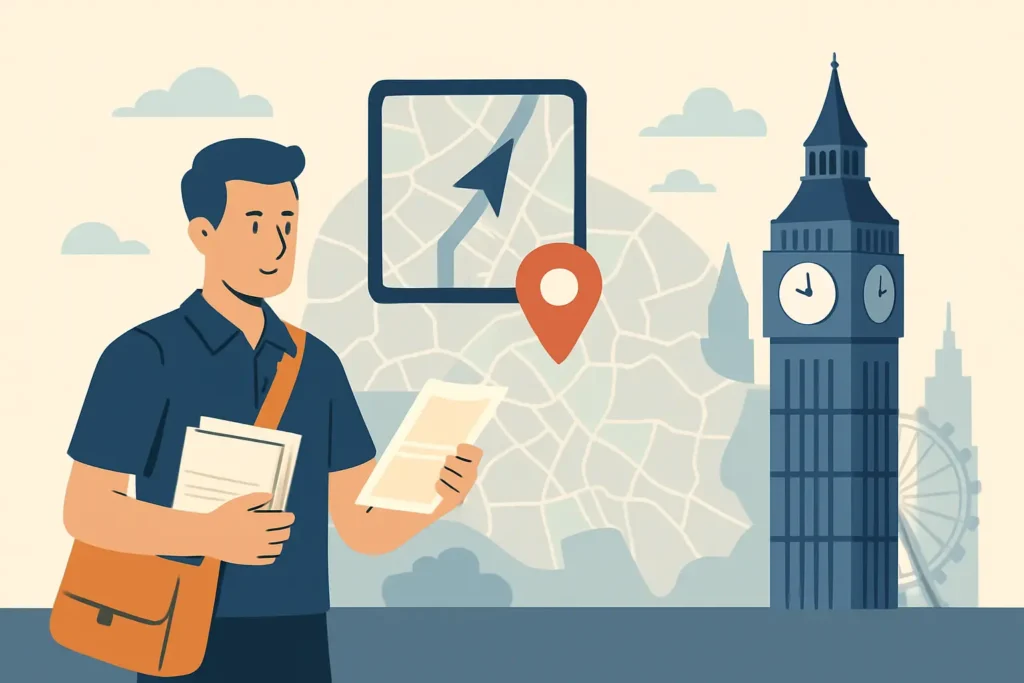
A leaflet campaign can look simple on paper and still fail badly in practice. The offer is decent, the print looks sharp, and the postcode list seems right – but response is weak because the wrong streets were covered, delivery was rushed, or there is no proof the campaign went where it was meant to go.
That is the real issue with leaflet distribution in London. It is not just about getting print through doors. It is about getting the right message into the right hands, in the right areas, with proper control from start to finish.
Why leaflet distribution in London still delivers
London is crowded, competitive and local at the same time. People may travel across the city for work, but when they need a restaurant, dentist, gym, cleaning company, estate agent or event nearby, they usually act close to home. That is where well-run leaflet campaigns still make commercial sense.
Digital advertising has its place, but it also has its blind spots. Costs can rise fast, targeting is not always as accurate as promised, and local businesses often end up fighting for attention in a space packed with bigger brands. A physical leaflet is different. It reaches households directly, stays in the home, and gives people something they can keep, pin up or pass on.
It also works well when speed matters. If you need to promote a local launch, drive footfall, fill appointments or support a seasonal push, a managed leaflet campaign can put your message in front of thousands of local households quickly. That kind of reach is hard to ignore when it is planned properly.
What separates a strong campaign from wasted print
The biggest mistake businesses make is treating distribution as a standalone task. In reality, results depend on a chain of decisions. If one part is weak, the whole campaign suffers.
Targeting comes first. London is not one market. A family-heavy residential area in one borough will respond differently from a high-turnover rental area in another. A hand-to-hand campaign near stations or shopping areas can work for some offers, while door-to-door delivery makes more sense for others. The method should fit the audience, not the other way round.
Creative matters too. Many leaflets try to say too much. They cram in services, long paragraphs, multiple offers and tiny contact details. The better approach is direct and focused. One core message. One clear benefit. One action to take next. If you are asking someone to book, call, visit or claim an offer, that should be obvious within seconds.
Then there is execution, which is where many campaigns fall apart. Unsupervised teams, vague coverage claims and no delivery reporting create risk for the client. If you cannot verify where your leaflets went, you are relying on trust alone. That is not good enough for businesses that need accountability.
The case for GPS-tracked leaflet distribution in London
This is where operational control becomes the difference between a campaign that feels hopeful and one that feels managed.
GPS tracking gives visibility over where distribution teams have actually worked. Supervision adds another layer of confidence. Reporting closes the loop. Together, those elements turn leaflet delivery from a loose promise into a process with evidence behind it.
For business owners and marketing teams, that matters for two reasons. First, it protects the campaign itself. Second, it helps you make better decisions on the next drop. If one set of postcodes performs strongly and another does not, you can refine the next round instead of guessing.
A money-back guarantee also says something important about the distributor. It shows they are prepared to stand behind delivery standards rather than hide behind broad claims. In a market where reliability is often the real concern, that level of accountability is a serious advantage.
How to plan a leaflet campaign that gets a response
Start with the outcome, not the leaflet. Do you want booked appointments, in-store visits, calls, quote requests or event attendance? If the goal is vague, the message usually ends up vague as well.
Once the outcome is clear, think carefully about area selection. Good targeting is not just about affluent postcodes or large household numbers. It is about fit. A tutoring service might need family-dense streets. A takeaway launch may need a tight local radius around the site. A home improvement company may want owner-occupied areas with the right housing stock. Better targeting usually beats wider but weaker coverage.
Your design should then support a quick decision. Strong headlines, clean layout and one obvious response route make a difference. That could be a phone number, QR code, website landing page or promo code. What matters is that response can be tracked. If you do not measure the action, it becomes much harder to judge whether the campaign performed.
Timing also deserves more attention than it usually gets. A leaflet can be well designed and accurately delivered, but still land at the wrong moment. Events need lead time. Hospitality offers may perform differently across weekdays and weekends. Seasonal services need to appear before demand peaks, not after.
Door-to-door or hand-to-hand?
Both can work, but they do different jobs.
Door-to-door distribution is usually the better option when you want broad residential reach across selected postcodes. It suits businesses that rely on local households and repeat custom, such as trades, food outlets, dental practices, gyms, childcare providers and estate agents. It gives the message a chance to stay in the home and be acted on later.
Hand-to-hand distribution is better when location and timing are central to the offer. If you need to reach commuters, shoppers, event-goers or students in a specific area, direct street-level promotion can create immediate awareness. It can feel more urgent and more personal, but it is also more dependent on footfall patterns and the quality of the interaction.
The right answer depends on your audience and the action you want them to take. Some campaigns even benefit from using both, especially when a local launch needs repeated visibility.
Why done-for-you campaigns save time and reduce risk
Many businesses do not have the internal time to manage briefing, design, print coordination, area mapping, team control and reporting separately. Trying to piece it together across multiple suppliers often leads to delays, mixed accountability and uneven quality.
A managed service removes that friction. Consultation helps sharpen the message. Creative support improves response potential. Printing and distribution are aligned from the start. Delivery is monitored, and reporting gives you evidence of coverage.
That approach is especially useful for first-time advertisers who need guidance, but it is just as valuable for experienced marketers running at volume. When campaigns have to move quickly and cover large London areas with confidence, a managed process is often the safer option.
This is exactly why businesses work with specialists such as Wendigo Distribution. The value is not just in moving leaflets from one place to another. It is in controlling the campaign properly, with GPS-tracked distribution, supervised teams and clear accountability throughout.
Common reasons leaflet campaigns underperform
Poor performance does not always mean leaflet marketing is ineffective. More often, it means the campaign was too broad, too weak creatively, or too difficult to verify.
A generic leaflet sent to the wrong households will struggle. So will a strong offer buried under cluttered design. Another common issue is expecting one drop to do all the work. Some services need repetition before response builds, particularly in competitive local markets.
There is also the question of expectation. A leaflet campaign should be judged against the right objective. For some businesses, the immediate return is the priority. For others, the bigger win is local awareness, repeat exposure and a steady flow of leads over time. It depends on the sector, the offer and how well follow-up is handled.
What businesses should look for in a distributor
Reliability should come before promises. Ask how areas are selected, how teams are managed, how delivery is tracked and what reporting is provided afterwards. If the answers are vague, that is a warning sign.
You should also look for practical support beyond delivery. A campaign works better when the distributor understands targeting, format, message clarity and measurable response. That service-led approach gives you a stronger campaign before the first leaflet is even printed.
The best leaflet distribution in London is not the loudest. It is the most controlled, best targeted and easiest to verify.
If you want printed marketing to bring in real local attention, treat distribution as a managed growth channel rather than a box-ticking exercise. The homes you reach matter, the message matters, and proof of delivery matters just as much. Get those three right, and leaflets stop being guesswork and start becoming a practical way to win business locally.